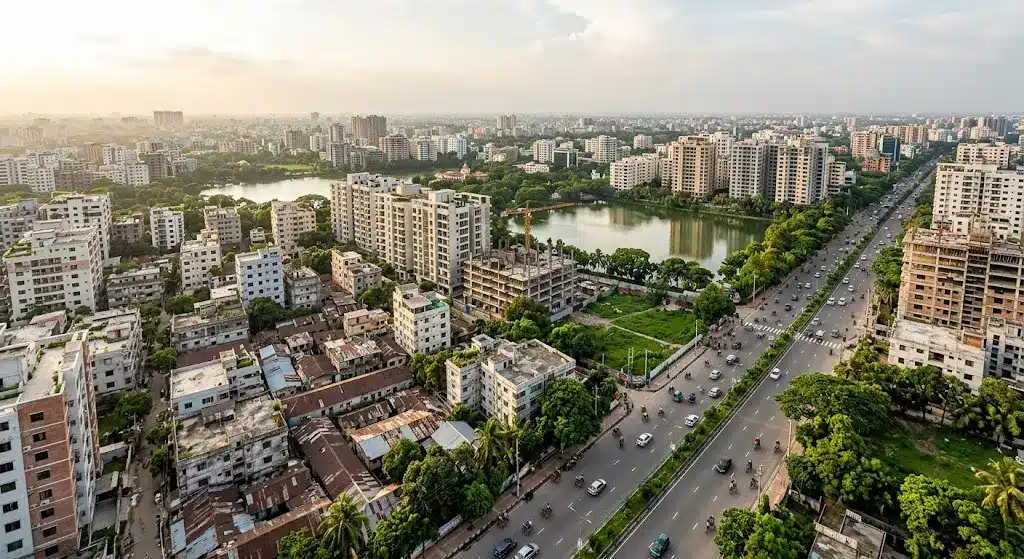
Buying an apartment in Bangladesh’s bustling capital is both a major life milestone and one of the largest financial investments you will ever make. As the city continues its rapid expansion across established neighborhoods and newly planned townships, the real estate market offers an unprecedented variety of choices. However, navigating this dynamic landscape requires careful research, strategic planning, and meticulous verification. Knowing exactly what to check before buying flat in dhaka can mean the difference between securing a cherished sanctuary that appreciates in value and falling into a complex web of legal, financial, or structural troubles.
Whether you are a first-time homebuyer searching for a family residence or an investor looking for reliable rental yields, performing due diligence is non-negotiable. To protect your hard-earned money and secure your peace of mind, this comprehensive guide outlines everything you need to evaluate before signing on the dotted line.
1. Legal Verification and Property Documentation
The legal status of the land and the building is the foundation of any real estate transaction. In Bangladesh, land record history can be intricate, making legal due diligence the single most critical step in the property buying process.
Land Ownership and Title Chain
Before making any financial commitment, you must trace the ownership history of the land back several decades. Ensure that the developer or landowner possesses a clean, marketable title free from encumbrances, litigation, or government acquisition notices. You should verify the following historical land surveys (Khatians):
- C.S. (Cadastral Survey): The baseline survey record.
- S.A. (State Acquisition): The post-partition land record.
- R.S. (Revisional Survey): The revised survey record verifying updated ownership.
- B.S. / City Jarip: The current municipal land record.
Ensure that the seller’s name matches across the latest Khatian, the Mutation Khatian (Namjari), and the uptodate Land Development Tax (Khajna) receipt.
RAJUK Approval and Approved Layout Plan
Rajdhani Unnayan Kartripakkha (RAJUK) is the capital city’s development authority. Every multi-story residential project in Dhaka must have an official sanction plan approved by RAJUK. When reviewing what to check before buying flat in dhaka from a legal perspective, insist on inspecting the official approved architectural plan. Verify that:
- The proposed building height and floor count match the approved plan.
- The layout adheres to standard setbacks and road-widening reservations.
- The project has obtained a formal Occupancy Certificate (if completed) or approval under the latest Bangladesh National Building Code (BNBC).
Joint Venture Agreement and Power of Attorney
If the building is being constructed on a joint venture basis between a landowner and a developer, request the registered Joint Venture Agreement and the Registered Power of Attorney (PoA). Check the landowner and developer sharing ratio and confirm that the specific unit you are purchasing falls strictly within the developer’s allocated share.
2. Developer Reputation and Construction Track Record
A beautiful brochure or 3D architectural render can easily hide structural flaws or operational delays. Partnering with an ethical, experienced developer ensures that your investment remains safe and delivered on time.
Project Portfolio and On Time Handover Record
Investigate the developer’s history. How many projects have they successfully completed? Have they consistently handed over properties within the pledged timeframe? Visiting completed projects allows you to inspect the aging quality of the structure, talk to current residents about post handover customer support, and evaluate overall build quality.
Industry Accreditation
Check whether the real estate company is a registered member of REHAB (Real Estate & Housing Association of Bangladesh) and approved by the Ministry of Housing and Public Works. Membership in established professional associations provides an extra layer of buyer accountability and formal dispute resolution channels.
3. Location, Infrastructure, and Neighborhood Livability
Location determines not only your daily quality of life but also the long-term capital appreciation of your property. Dhaka is a city of micro markets, where living standards can vary significantly from one block to another.
Road Network and Accessibility
Evaluate the main approach road leading to the building. Is the road wide enough (at least 20 to 30 feet) to allow two vehicles to pass comfortably? A narrow access road can severely restrict emergency vehicle access, reduce privacy, and lead to daily traffic bottlenecks.
Waterlogging and Environmental Factors
Dhaka experiences intense monsoon seasons. Before finalizing your decision, research whether the immediate road or neighborhood suffers from chronic waterlogging during heavy rainfall. Additionally, check the elevation of the ground floor and basement entry relative to the main road level.
Proximity to Everyday Amenities
Consider the daily commuting needs of your family. Assess the driving distance and accessibility to essential urban services:
- Reputable schools and universities.
- Multi specialty hospitals and emergency clinics.
- Grocery markets, retail hubs, and public parks.
- Mass transit routes like the Dhaka Metro Rail stations or major arterial expressways.
Emerging planned zones like Purbachal offer wide avenues and dedicated green infrastructure, while traditional areas like Banani and Dhanmondi offer mature commercial ecosystems. Choose a neighborhood that fits your long-term lifestyle needs.
4. Structural Integrity, Engineering Standards, and Materials
Structural safety is paramount, especially given Dhaka’s geographic vulnerability to seismic activity. Never compromise on structural engineering and material quality.
Earthquake Resistance and Soil Testing
Ensure that the building’s structural design complies fully with the latest Bangladesh National Building Code (BNBC) for earthquake resistance. Ask the developer for the Soil Test Report and structural engineering drawings certified by a registered professional engineer. In areas with soft or filled soil, deep pile foundations are mandatory to guarantee structural stability.
Quality of Building Materials
Inquire about the specifications of primary construction materials:
- Steel Rebar: 60 grade or 500W TMT steel bars from reputable manufacturers.
- Cement and Concrete: High strength Portland cement and specified crushed stone aggregate mixtures for structural casting.
- Bricks or Blocks: High density auto bricks or concrete hollow blocks for sound insulation and thermal performance.
5. Architectural Layout, Ventilation, and Sunlight
A well-designed apartment optimizes space, natural light, and airflow, drastically reducing long-term energy costs and creating a healthier indoor environment.
Floor Plan Efficiency
Analyze the usable square footage versus the gross square footage. Look for layout efficiency:
- Minimal hallway wastage and well proportioned rooms.
- Proper segregation between private bedrooms and public entertainment zones (living or dining).
- Functional kitchen arrangement with adequate space for appliances.
Orientation and Natural Ventilation
In Bangladesh’s tropical climate, orientation matters immensely. South facing and south east facing apartments capture the cooling summer breeze and pleasant winter sunlight. When considering what to check before buying flat in dhaka during a site visit, check the positioning of windows and balconies to ensure cross ventilation and unblocked light from adjacent buildings.
6. Utilities, Essential Facilities, and Security Ecosystem
Modern urban living depends on continuous, reliable utility services and robust building security.
Water, Gas, and Electricity Connections
- Water Supply: Confirm the source of water (WASA connection, deep tube well, or rainwater harvesting system) and check if a water filtration or treatment plant is included.
- Gas Connection: Because new pipeline gas connections in Dhaka are restricted, verify whether the building features a centralized LPG reticulation system or designated cylinder storage facilities.
- Electricity: Check for dedicated sub station capacity and individual digital meters for each apartment.
Back Up Power and Mechanical Amenities
Power outages require reliable backup infrastructure. Inspect the capacity of the standby generator—does it cover only common area lights and lifts, or does it power household lights, fans, and refrigerators inside the apartment? Additionally, ensure that elevators are sourced from international brands equipped with Automatic Rescue Devices (ARD).
Security and Fire Safety Systems
Look for multi layered security infrastructure:
- 24/7 CCTV surveillance covering gates, lobbies, and basements.
- Gated entry with intercom or smart video door phone connections.
- Fire protection measures including fire hydrants, extinguishers, smoke detectors, and emergency fire exit staircases.
7. Financial Transparency, Hidden Costs, and Payment Schedules
A clear financial roadmap prevents unexpected budgetary stress down the line.
Comprehensive Cost Breakdown
Get a complete, written cost estimate from the developer. The total cost of an apartment includes more than just the baseline price per square foot. Be sure to account for:
- Car Parking Allocations: Single or double basement parking fees.
- Utility Connection Charges: Fees for electricity, gas system setup, and WASA connection.
- Documentation and Registration Fees: Stamp duty, registration tax, gain tax, and local municipal transfer fees (typically amounting to 10% to 12% of the total deed value).
- Reserve Fund and Maintenance Deposits: Initial contributions for building management and sinking funds.
Milestone Linked Payment Schedule
Avoid paying large lump sums upfront. Negotiate a construction linked payment schedule where installment disbursements are tied directly to verified physical construction milestones (e.g., completion of piling, roof casting, brickwork, and interior finishing).
Regarding the buttons: Interface features like copy, like, or dislike buttons are part of the platform UI (user interface) that your website or chat system displays around the generated text—they cannot be coded inside the Markdown text itself. Check your platform settings or front-end interface to make sure those actions are enabled on your end.